Hoverboard Safety & Maintenance Essentials: Ride with Confidence
Safe hoverboarding comes down to three things: a UL 2272 certified board, safe charging habits, and protective gear with a little practice. Regular checks of tires, wheels and the casing keep the board riding smoothly.
Last reviewed
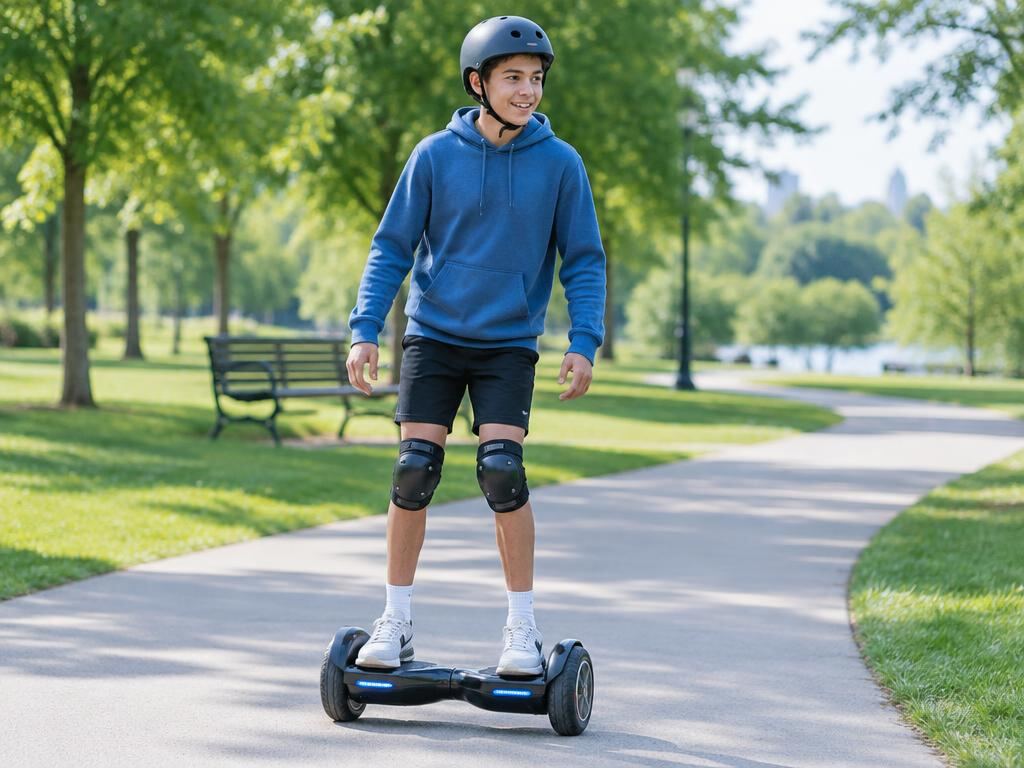
Safety first
Buy certified
UL 2272 covers the electrical system of self-balancing scooters. Check for the label on the board and the box.
Charge carefully
Use the original charger, charge in an open area on a hard surface, and do not leave a charging board unattended or overnight.
Wear gear
Helmet, wrist guards, knee and elbow pads. Falls usually happen when getting on and off.
Choose the right place
Smooth, flat, dry surfaces away from traffic. Avoid curbs, gravel, wet ground and steep slopes.
How to get on and off
- Place the board on flat ground and power it on.
- Step on with your dominant foot first, close to the wheel, then the other foot quickly.
- Stand upright, look ahead and keep knees relaxed.
- To step off, stop fully and step backward, one foot at a time.
Monthly maintenance checklist
- Wipe the board with a dry or slightly damp cloth; never hose it down.
- Check tire pressure if your board has air-filled tires.
- Look for cracks in the casing and loose foot pads.
- Recalibrate the gyroscope if the board feels uneven (see your manual).
- Store indoors at room temperature, partly charged.
Troubleshooting basics
| Symptom | Likely cause | What to try |
|---|---|---|
| Beeping, won't balance | Not level at start-up, needs calibration | Restart on flat ground; recalibrate |
| One side vibrates | Uneven sensor or loose part | Recalibrate; contact manufacturer if it continues |
| Won't charge | Charger or port issue | Check connection; stop using if battery is hot or swollen |
| Short ride time | Battery aging or cold weather | Charge at room temperature; consult warranty |
Ready for the next step?
Read the Hoverboard FAQs